
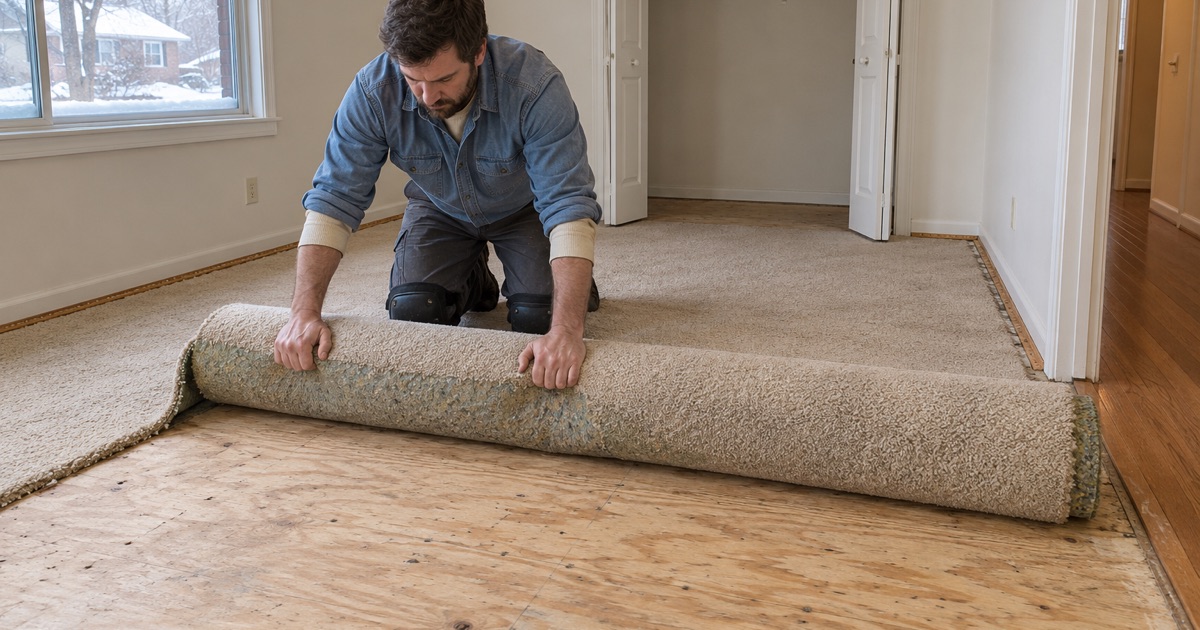
Minnetonka Wood Flooring has helped homeowners replace carpet with hardwood for more than 20 years, pulling carpet, pad and tack strip and putting either new hardwood or the restored original floor in its place. The decision between those two starts with lifting a corner of the carpet, which we do before writing any quote.
Many houses in and around Minnetonka have oak flooring hiding under wall-to-wall carpet. When it is there and in reasonable shape, a full sand and refinish often costs much less than new flooring. When it is not, we check the subfloor and install new solid or engineered hardwood suited to the room.
Either way, the quote lists carpet removal, subfloor repair, flooring and stairs separately. Subfloor fixes are priced on their own line, and carpeted stairs are priced per tread and riser, so each part of the conversion has a visible cost.
What We Find Under the Carpet
Original Hardwood Worth Saving
Older houses often have red oak or white oak strip flooring under the carpet, sometimes in excellent condition because the carpet protected it for decades. It usually carries staple holes, tack strip nail lines along the walls, pad residue and the occasional stain.
Most of that sands out in a full sand and refinish. Boards split by tack strip or darkened by deep pet stains are replaced and woven into the existing floor before finishing.
Plywood or OSB Subfloor
In many houses built for carpet, there is no finished floor under the pad, just a plywood subfloor or OSB subfloor. That subfloor becomes the base for new hardwood, so we check it for squeaks, soft spots, damage and flatness before installing anything. Subfloors under carpet often have years of hidden problems, such as old pet accidents, water stains near bathrooms, or loose panels that the carpet’s cushioning masked.
Old Tile, Adhesive and Black Mastic
Some rooms reveal old vinyl tile or black mastic adhesive under the carpet. In older homes, these materials can contain asbestos, so we do not sand or grind them before they are assessed. If testing is needed, we tell you before going further, and the flooring plan may change to cover rather than remove them.
New Hardwood or Refinished Original
When to Refinish What Is There
If the original hardwood is sound, flat and thick enough to sand, refinishing is usually the most economical choice. It also keeps the floor consistent with rooms that already have exposed hardwood. We check how much wood remains above the tongue, especially if the floor was sanded before it was carpeted.
When to Install New Flooring
New flooring is the answer when there is no hardwood underneath, when the original is too damaged or too thin, or when you want a different species, width or look. Solid hardwood suits above-grade rooms on a wood subfloor, while engineered hardwood suits basements, concrete and condominiums with specific requirements.
Matching Rooms That Already Have Hardwood
When carpet comes out of a bedroom next to a hallway with existing oak, the new or refinished floor should match. We identify the existing species, width and cut, then either lace new boards into the existing floor or refinish both areas together so the color is consistent.
Subfloor and Moisture Checks
Squeaks and Soft Spots
Carpet hides squeaks that become obvious once hardwood goes down. Before installation, we screw down loose subfloor panels to the joists and repair soft spots, which is far easier with the carpet gone and the subfloor fully exposed.
Moisture Readings
We read moisture on the subfloor with a pin moisture meter and on the new flooring before installation, and record both. If a stain or soft area suggests a past leak, we check that the subfloor is dry and sound before covering it.
Basements and Lower Levels
Carpeted basements are common conversions. We decide whether the level is below grade using the NWFA three-inch soil rule, including walkout lower levels, then test the slab with an in-situ relative humidity test or a calcium chloride test. Below grade, we recommend engineered or floating flooring over a vapor retarder rather than solid hardwood.
Stairs, Transitions and Trim
Carpeted Stairs
A carpeted staircase usually needs new treads or a careful refinish to match the new floor, plus nosing that may have been cut back for the carpet. We price stairs per tread and riser and finish them alongside the floor so the color carries through.
Doorways and Floor Heights
Where hardwood meets tile, carpet in another room or a door threshold, we install reducers, T-molding or thresholds. We also check whether doors need trimming, since the new floor may sit at a different height than carpet and pad.
Baseboard and Quarter Round
Carpet often hides a gap between baseboard and subfloor. Once hardwood is installed with its expansion gap, quarter round or shoe molding covers that space neatly. In pre-1978 houses, we follow the federal lead-safe work rule when removing or disturbing painted trim.
Living With the New Floor
Sound in Condos and Townhomes
Carpet absorbs footstep noise. In a townhome or condominium, hardwood above another unit can increase noise below, and many associations require an acoustic underlayment or approval before the change. We read the association documents and match the underlayment to the building before the job is scheduled.
Humidity and Seasonal Movement
Hardwood responds to humidity in ways carpet never did. Small gaps in winter and tighter boards in summer are normal. Keeping indoor relative humidity in the thirty to fifty percent range, often with a whole-house humidifier in furnace season, keeps the new floor stable and looking its best.
- 20+ Years on Wood Floors
- Per-Square-Foot Written Quotes
- Stairs Priced Per Tread